Summary: The Canadian Dental Care Plan considers certain dental crowns for eligible adults, but preauthorization is mandatory. Your dentist must assess tooth damage, gum health, bone support, and restorability. Understanding documentation requirements, coverage limits, co-payments, and possible extra charges helps you make informed decisions before treatment. Always confirm approval and costs before proceeding.
A damaged tooth can affect how you eat, speak, and smile. But will the Canadian Dental Care Plan (CDCP) pay for your crown? Well, before you go searching out for options related to – CDCP dentist near me, here’s what you need to know about the rules –
Why Are CDCP Patients Asking More Questions About Dental Crowns?
You have a cracked tooth. Your dentist recommends a crown. Naturally, you expect your CDCP benefits to help pay for it. But there is one step you should not overlook: preauthorization.
A recent report by Canada’s Auditor General, covered by CBC News on October 29, 2026, highlighted gaps in CDCP administration. It found unclear reasons for some denied preauthorization requests and delays in communicating decisions.
The report also raised concerns about oversight and funding pressures. These findings matter when you need complex restorative dental treatment. A dentist’s recommendation does not automatically mean the CDCP will approve payment.
So, what should you know before booking your appointment? Let’s break it down.
When Does Your Dentist Recommend a Dental Crown?
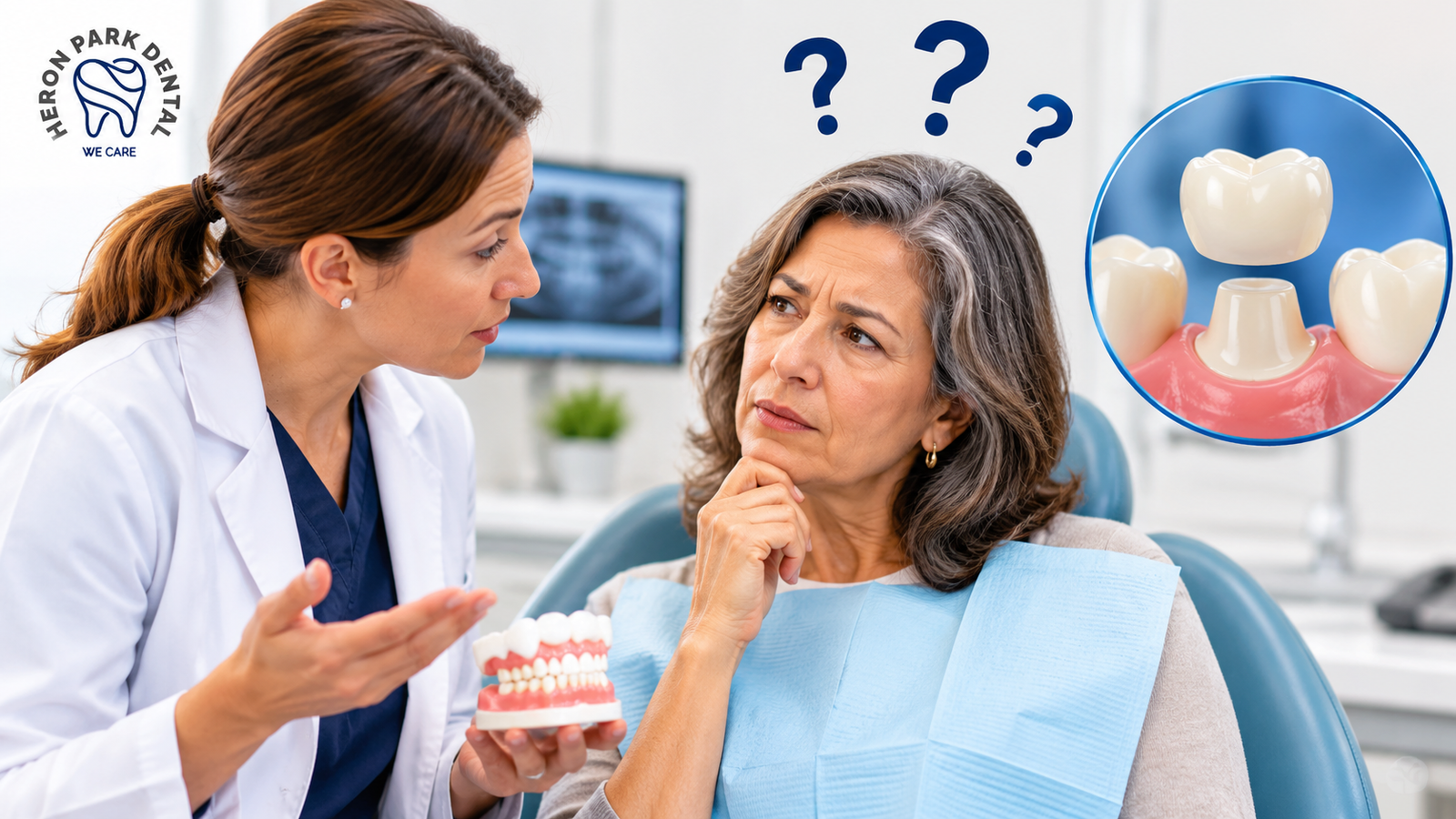
A dental crown is a custom-made cap that covers a damaged tooth. It restores the tooth’s shape, strength, and function. Think of it as a protective cover for a weakened tooth.
Your dentist may recommend a crown when:
- A tooth has extensive decay.
- A large filling has weakened the remaining tooth.
- A serious fracture has damaged the tooth structure.
- A tooth needs protection after root canal treatment.
- Too much healthy tooth structure is missing for a regular filling.
However, not every damaged tooth needs a crown. Smaller cavities may need fillings instead. Your dentist must assess the remaining tooth structure before choosing the right treatment.
How Does a Dentist Decide If Your Tooth Needs a Crown?
The process starts with a clinical examination. Your dentist checks the damaged tooth, nearby teeth, gums, and bite. They also ask about pain, swelling, sensitivity, and previous dental treatment.
Dental X-rays help reveal problems beneath the visible surface. They show the roots, surrounding bone, and hidden areas of decay. Your dentist may also take photographs to record the damage.
Gum health matters just as much. A crown needs a stable foundation. If gum disease affects the tooth, you may need treatment before receiving your crown.
For complex cases, your dentist may suggest a prosthodontist. This dental specialist focuses on restoring and replacing damaged or missing teeth. Their expertise can help with advanced restorative dentistry and complex treatment planning.
Does the CDCP Cover Dental Crowns?
Yes. The CDCP considers certain dental crowns for eligible patients aged 18 and older. However, every crown request requires preauthorization.
The plan considers coverage for these single-unit crown types:
- Cast metal crowns.
- Porcelain or ceramic-fused-to-metal crowns.
- Porcelain or ceramic crowns.
The CDCP also sets frequency limits. It considers up to four crowns within 120 months per patient. Each eligible tooth can receive one covered crown within 96 months.
However, implant-supported crowns and implant-related procedures are excluded. Crowns requested only to improve appearance are also not covered.
This is why you should check coverage before agreeing to treatment when you explore options such as – CDCP dentist near me, or the best CDCP dentist in Ottawa, and such! Your dentist must show that the tooth meets the plan’s eligibility and restorability criteria.
What Is CDCP Preauthorization, and Why Do You Need It?
Preauthorization means requesting coverage before starting a proposed dental procedure. Your dentist sends the request to Sun Life with supporting clinical records.
The CDCP reviews the information against its clinical criteria. It checks whether your tooth qualifies for crown coverage under the plan’s rules.
Here is where confusion often begins. Your dentist may believe a crown is the best treatment. However, the CDCP may still decline payment if its requirements are not met.
Remember, clinical necessity and insurance approval are different decisions. Preauthorization confirms potential plan coverage, not whether your dentist should recommend treatment.
Never assume approval. Wait for the decision before starting a procedure that requires preauthorization.
What Documents Does the CDCP Need for Crown Approval?
A strong preauthorization request needs clear clinical evidence. Your dentist must explain the tooth damage and show why a simpler restoration may not work.
For crown requests, the CDCP requires supporting information, including:
- Dated periapical and bitewing X-rays from within 12 months.
- A complete periodontal chart from within 12 months.
- Six gum measurements around the tooth being treated.
- A treatment plan showing completed and pending dental needs.
- Clinical notes explaining the proposed treatment.
The CDCP also checks bone support and remaining healthy tooth structure. The tooth must have enough sound structure to support the crown.
For example, a badly damaged molar may need a crown. However, the dentist must show that it meets the plan’s specific requirements.
Active decay and gum disease must also receive basic treatment before a crown request. A root canal-treated tooth must heal before the dentist submits the crown request.
What Should You Ask a CDCP Dentist?
Choosing a dental clinic involves more than checking whether it accepts CDCP patients. You need clear answers, careful treatment planning, and an honest cost estimate.
Ask these five questions before booking your crown:
1. Do you accept CDCP patients?
Confirm that the clinic accepts CDCP patients and agrees to bill Sun Life directly for covered services.
2. Will you examine my tooth before recommending a crown?
A proper examination helps identify the damage. Ask whether you need X-rays, gum checks, or further tests.
3. Will your team submit the preauthorization request?
Find out who handles the paperwork. Ask what records the clinic will submit and how you will receive updates.
4. Can I get a written treatment estimate?
Ask for the crown type, treatment fees, expected CDCP payment, and possible extra charges. Request a clear cost breakdown before treatment.
5. What happens if the CDCP declines my request?
Ask about suitable alternatives and the reconsideration process. Find out whether your dentist can provide additional clinical evidence.
These questions help you stay informed. They also reduce the risk of unexpected treatment costs.
How Much Will You Pay for a Dental Crown?
Your final cost depends on your adjusted family net income, CDCP fees, and your dentist’s charges.
The CDCP covers:
- 100% of eligible CDCP fees if your income is below $70,000.
- 60% if your income is $70,000 to $79,999.
- 40% if your income is $80,000 to $89,999.
You pay the remaining co-payment, where applicable. You may also pay the difference if your dentist charges more than the CDCP established fee.
Here is something many patients miss. Even 100% coverage does not always mean a free crown. Extra charges may still apply.
Ask your dentist for a written estimate. It should explain the expected CDCP contribution and your share before treatment begins.
What If the CDCP Rejects Your Crown Request?
A denied request does not always mean you have no options. Start by asking your dentist to explain the reason for rejection.
Sometimes, the request needs clearer X-rays or more complete gum records. Missing clinical details can affect the decision. Your dentist can review the submission and identify what needs improvement.
The CDCP allows one reconsideration for eligible denied requests. Your dentist must submit new or additional clinical evidence within 60 days of the denial.
However, excluded procedures cannot be reconsidered. Ask about temporary care, suitable alternatives, and the risks of delaying treatment while you wait.
Can You Use the CDCP for Other Dental Treatments?
Yes. The CDCP supports several preventive and restorative services, depending on your eligibility and treatment needs.
These include dental examinations, X-rays, cleanings, fillings, certain root canal treatments, and dentures. Some procedures need preauthorization before treatment.
However, not every dental service qualifies. Orthodontic services are not currently available under the CDCP. Implant procedures are also excluded.
Cosmetic treatments follow different rules. The plan does not cover purely cosmetic procedures, such as veneers or professional teeth whitening. If you are searching for teeth whitening Ottawa Ontario, ask your dentist about separate cosmetic treatment options and costs.
A personalised dental plan can help you manage both oral health needs and cosmetic goals without confusion.
Protect Your Smile With Clear Dental Treatment Planning
A dental crown can protect a weakened tooth, but CDCP approval depends on clinical evidence, eligibility, and plan rules.
At Heron Park Dental, we believe you deserve clear answers before choosing treatment. We offer personalised dental care for Ottawa families, including preventive, restorative, cosmetic, orthodontic, implant, and emergency services. Call 613-680-3310 or email info@heronparkdental.com to discuss your needs and book an appointment.
Frequently Asked Questions About CDCP Dental Crowns
1. Does the CDCP cover dental crowns in Ottawa?
Yes. The CDCP considers eligible crowns for adults aged 18 and older. However, preauthorization and specific clinical requirements apply.
2. Can I receive a dental crown without CDCP preauthorization?
Your dentist can recommend treatment, but CDCP coverage requires prior approval for crowns. Starting treatment without approval risks full out-of-pocket payment.
3. How long does CDCP crown approval take?
Processing times vary. The Auditor General reported improvements in decision times, but delays remain possible. Ask your clinic for submission updates.
4. Can my dentist recommend a crown if the CDCP rejects it?
Yes. Your dentist can recommend clinically suitable treatment even when the CDCP declines coverage. Discuss reconsideration and alternative payment options.
5. Does the CDCP cover cosmetic dental crowns?
The CDCP considers crowns that meet restorative criteria. Crowns requested solely to improve appearance are not covered.