Summary: Planning for dental implants this fall means budgeting for the complete treatment journey, not an advertised starting figure. Consultation, imaging, preparation, implant placement, healing, restoration, and follow-up care may all affect your plan. Costs vary because every patient has different oral health needs. Comparing complete treatment plans helps you make a clearer, more informed decision.
As summer fades and fall routines return, dental appointments often move back onto your family calendar. If implants are on your list, planning early can make treatment clearer, calmer, and easier.
Start With the Full Treatment Plan, Not a Starting Price
If you are researching dental implants cost Ottawa, avoid choosing a clinic based only on an advertised starting figure. That number may cover only one part of treatment.
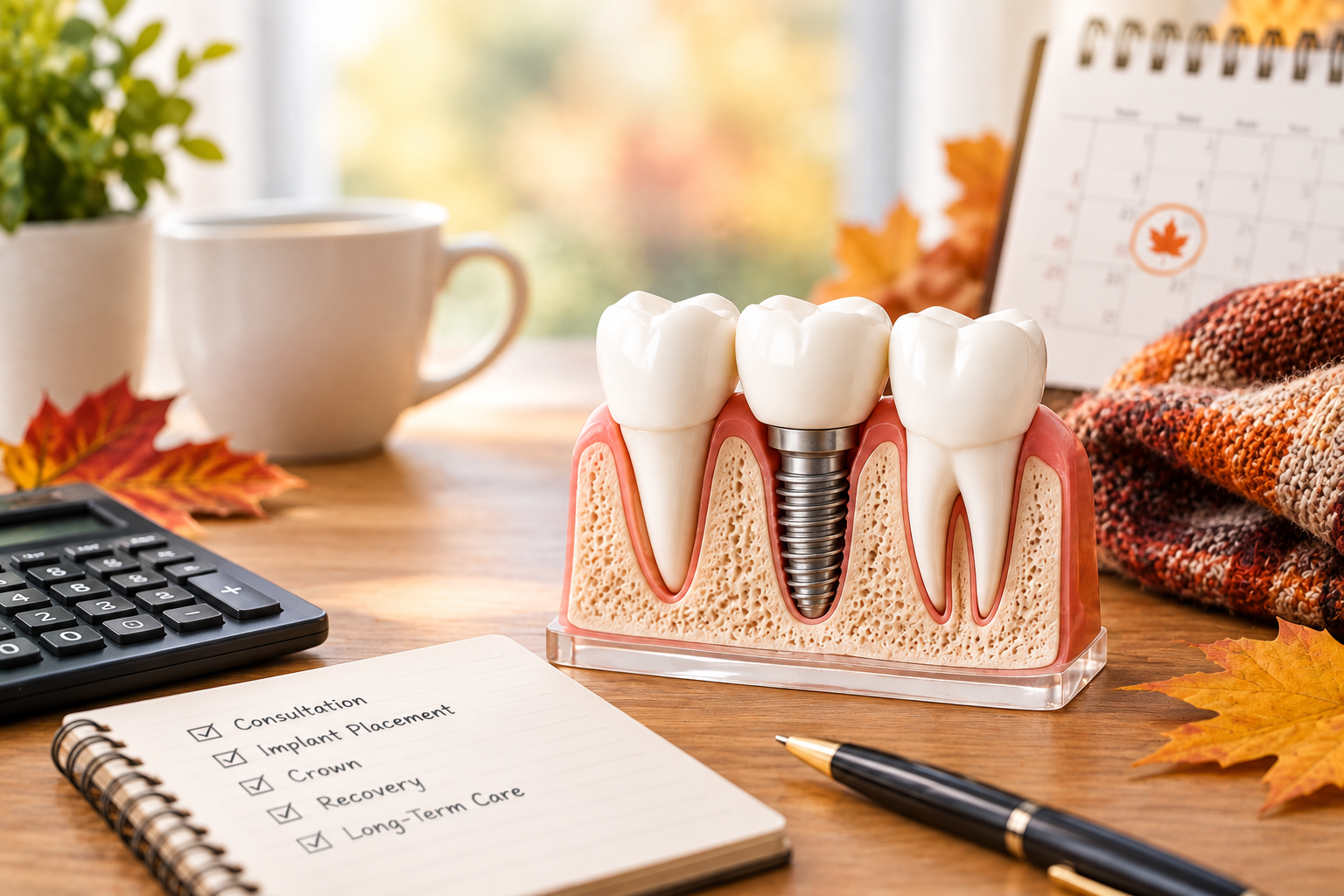
A dental implant replaces a missing tooth with a small titanium implant, an abutment, and a dental crown. Your treatment may include additional steps before these parts can work together.
Your budget should therefore cover the complete care pathway. Ask what is included, what may be needed before implant placement, and which follow-up visits form part of your plan.
Why Does Your Implant Budget Vary?
Every mouth is different. The number of missing teeth is only one factor. Your bone condition, gum health, bite, medical history, and treatment goals can also affect your care plan.
You may need a dental examination and X-rays before treatment begins. Some patients also need periodontal care, a tooth extraction, or bone grafting before implant placement can proceed safely.
These steps are not unnecessary extras. They help create the healthy foundation needed for predictable implant treatment and long-term oral function.
The type of restoration also matters. Replacing one tooth is different from replacing several teeth or supporting a larger implant restoration. Your final plan should reflect your actual needs.
What Should You Include in Your Fall Implant Budget?
Start with the consultation and diagnostic stage. Your dentist needs to assess your teeth, gums, jawbone, bite, and overall oral health before recommending an implant approach.
Next, ask about preparatory treatment. If gum disease, infection, an extraction, or insufficient bone affects your treatment, addressing that problem may come before implant placement.
Then consider implant placement itself. This is the surgical stage where the implant is positioned inside the jawbone, allowing the bone to heal around it.
After healing, an abutment connects the implant to the final restoration. The crown is then designed to restore the appearance and function of your missing tooth.
Your budget should also account for follow-up appointments. These visits allow your dental team to check healing, fit, comfort, oral hygiene, and the condition of the restoration.
Why Comparing Complete Plans Makes More Sense
Two clinics may advertise different starting figures while offering very different treatment plans. Comparing only the first number can therefore give you a misleading picture of your overall financial commitment.
Instead, ask each dental provider for a written treatment plan. It should explain recommended procedures, appointments, restorations, diagnostic services, and possible additional treatments.
This approach lets you compare like with like. You are not simply comparing a price. You are comparing the care required to reach the same treatment goal.
Ask one simple question: “What will I need from the first appointment through the final restoration?” The answer can reveal costs that a promotional starting figure does not show.
Could Delaying Treatment Affect Your Future Budget?
A missing tooth does not always create an urgent problem. However, leaving a gap untreated can affect chewing, neighbouring teeth, and the way forces move through your bite.
Bone loss can also occur after tooth loss because the jawbone no longer receives normal stimulation from the tooth root. The extent varies between patients and should be assessed clinically.
That does not mean every missing tooth requires an immediate implant. Your dentist can discuss suitable options based on your oral health, preferences, timing, and long-term goals.
If an implant is recommended, early planning may give you more time to understand the treatment stages, arrange appointments, and review available payment or insurance options.
How Can You Make Implant Care More Affordable?
Start by asking for a clear treatment sequence. Knowing which procedure comes first helps you understand when each part of your dental care may take place.
Check your dental insurance carefully. Coverage for implants varies widely, and some plans may cover certain related procedures without covering the complete implant restoration.
You can also ask your dental office about payment arrangements or financing options. Availability varies by clinic, so confirm the terms before starting treatment.
Do not skip recommended care simply to reduce the immediate expense. Treating infection or gum disease first can protect your oral health and support better implant planning.
What Questions Should You Ask Before Choosing a Clinic?
Ask whether the quoted treatment covers the implant, abutment, crown, diagnostic imaging, surgical appointments, and follow-up care. Clear answers make financial planning much easier.
Ask whether bone grafting or other preparatory treatment could become necessary. Your dentist may not know until the examination and imaging are complete.
You should also ask who will perform each stage of treatment and how your progress will be monitored. Good communication matters as much as technical skill.
If you are searching locally, a dentist Bank Street Ottawa can help you understand whether an implant suits your needs and what your treatment pathway may involve.
Why Fall Can Be a Good Time to Plan
Fall brings a natural reset. School schedules settle, work routines become more predictable, and many families start organising healthcare appointments before the busy holiday season arrives.
That makes the season useful for starting a dental assessment. You can learn what treatment involves before making financial decisions or committing to a specific timeline.
You also have time to discuss alternatives. Depending on your situation, your dentist may explain options such as a bridge or removable partial denture alongside implant treatment.
The goal is not to rush you into treatment. It is to give you enough information to make a confident decision based on your health and priorities.
What Should Your Dental Implant Budget Really Cover?
Your fall implant budget should cover the entire treatment journey rather than one advertised procedure. Think consultation, diagnostics, preparation, implant placement, healing, restoration, and follow-up care.
The right budget is personal because implant treatment is personal. Your bone, gums, bite, number of missing teeth, restoration choice, and oral health can all shape the plan.
Most importantly, ask for clarity before you compare providers. A complete treatment plan gives you a much better basis for judging value than a low starting figure.
With the right information, you can approach implant treatment without guessing. You can understand your options, plan your care, and choose treatment that supports your long-term oral health.
At Heron Park Dental, we can help you understand your implant options and plan your next step; call 613-680-3310 or email info@heronparkdental.com today.
Frequently Asked Questions
1. What affects the cost of dental implants?
The total cost can vary with the number of implants, bone and gum health, preparatory procedures, restoration type, diagnostic needs, and follow-up care.
2. Are dental implants covered by insurance?
Coverage depends on your dental insurance plan. Some policies may cover related procedures or restorations, while others may provide limited or no implant coverage.
3. Do I need bone grafting before an implant?
Not everyone needs bone grafting. Your dentist can determine whether you have enough healthy bone after examining your jaw and reviewing appropriate dental imaging.
4. How long does dental implant treatment take?
Treatment time varies. It may involve several stages, including healing after implant placement, before the final crown or restoration can be fitted.
5. Should I get a dental implant immediately after losing a tooth?
Not always. Your dentist should assess your oral health, bone condition, healing, and treatment goals before recommending the most suitable timing.