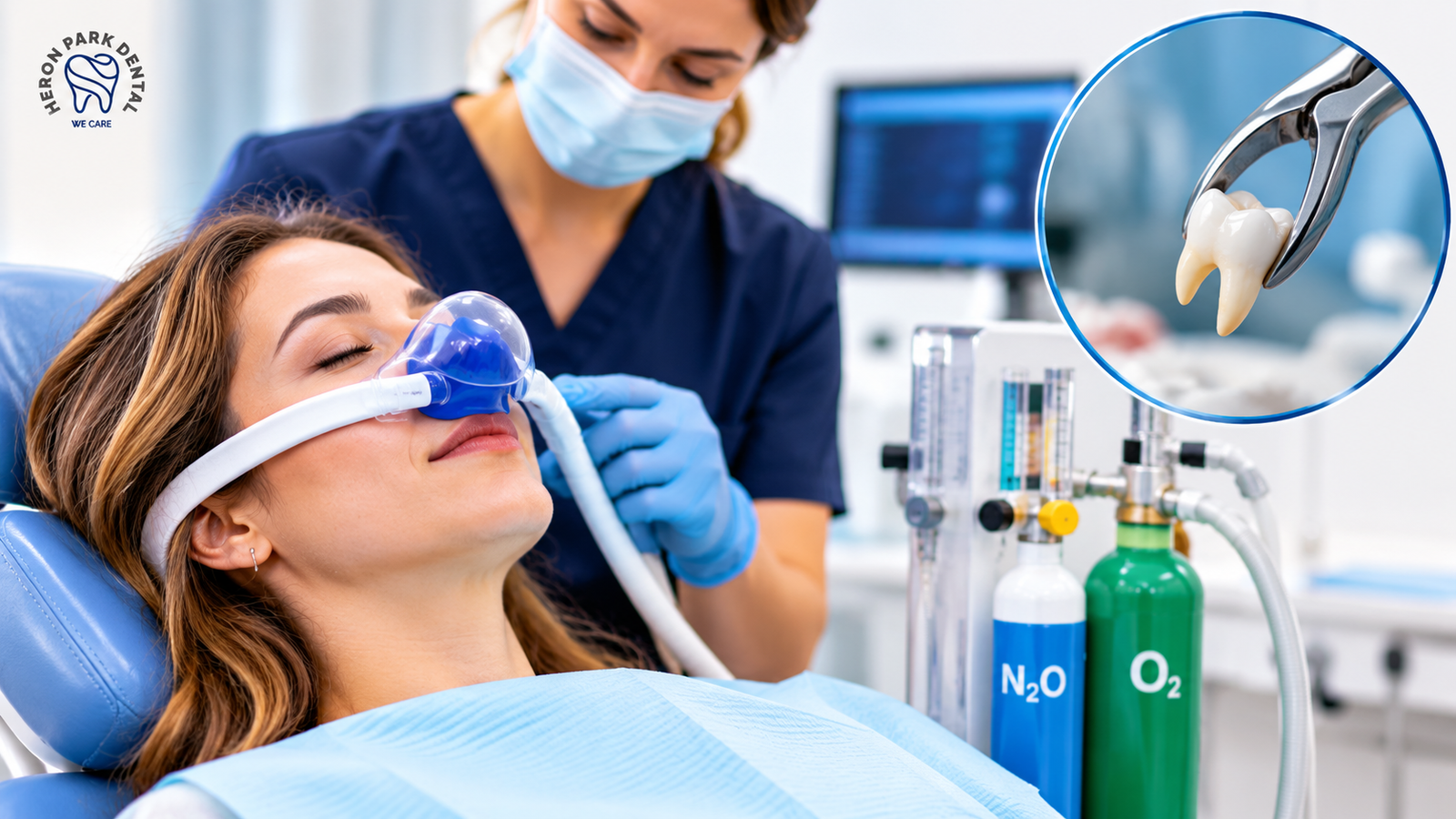
Summary: Nitrous oxide can help anxious patients feel calmer during an emergency tooth extraction. Also called laughing gas, it reduces anxiety without replacing local anaesthesia. Your dentist must review your medical history, assess your suitability and monitor you during treatment. Understanding the process can help you make a confident decision about urgent dental care.
A sudden toothache can turn an ordinary day upside down. When extraction becomes necessary, dental anxiety adds another worry. Could nitrous oxide make emergency tooth removal easier for you?
When Tooth Extraction Becomes Urgent, Can Nitrous Oxide Help?
Your tooth has been aching for days. Suddenly, the pain becomes unbearable. A broken tooth makes eating difficult, and the thought of extraction makes you nervous. You need relief, but fear holds you back.
This is where nitrous oxide dentists in Ottawa may help. Nitrous oxide can reduce dental anxiety during an emergency extraction. It helps you feel relaxed while remaining awake and responsive throughout treatment.
The best part? You can communicate with your dentist. You remain conscious and can follow simple instructions. This makes nitrous oxide a useful option for suitable patients who struggle with dental fear.
Why Does Nitrous Oxide Help During Emergency Tooth Extraction?
An emergency extraction can feel frightening. You may worry about pain, needles, instruments or the sound of dental equipment. These concerns can increase muscle tension and make treatment harder.
Nitrous oxide helps break this cycle. It reduces anxiety, making it easier to sit through treatment. You can breathe calmly and communicate with your dental team.
The gas also works quickly. Your dentist can adjust its concentration based on your response. Once administration stops, its effects usually wear off quickly.
For anxious patients, this added comfort can make an urgent dental visit feel more manageable.
Which Dental Emergencies May Require Tooth Extraction?
Not every damaged or painful tooth needs removal. Your dentist first checks whether the tooth can be saved. An examination and dental X-rays help guide this decision.
However, extraction may become necessary in certain situations.
1. Severely Damaged or Broken Teeth
A tooth can break after an accident, injury or advanced decay. Sometimes, the damage extends below the gumline or reaches the tooth root.
If a filling, crown or root canal cannot restore the tooth, extraction may be recommended. Nitrous oxide can help ease anxiety during the procedure.
2. Severe Dental Infections
A dental infection can develop when bacteria enter the inner part of your tooth. This may cause intense pain, swelling and an abscess.
Your dentist will assess the infection and its source. Depending on the condition, treatment may involve root canal therapy or extraction. Nitrous oxide can help you feel calmer during suitable urgent treatment.
Remember, laughing gas does not treat infection. The infected source still needs proper dental care.
3. Non-Restorable Teeth
Some teeth become too damaged to repair. Extensive decay, repeated dental problems or severe structural damage may leave little healthy tooth structure.
Your dentist may recommend extraction when saving the tooth is no longer practical. Nitrous oxide can make this experience less stressful for anxious patients.
Does Nitrous Oxide Replace Local Anaesthesia During Extraction?
No. This is one of the most important things to understand before your appointment.
Nitrous oxide reduces anxiety, but it does not provide enough pain control for tooth extraction. Local anaesthesia is generally required to numb the tooth and surrounding tissues.
Your dentist injects a local anaesthetic near the affected area. This blocks pain signals during the extraction. You may still feel pressure, movement or pushing, but sharp pain should not occur.
Think of it this way. Nitrous oxide helps calm your mind, while local anaesthesia controls pain. They perform different jobs and often work well together.
If you feel pain during treatment, tell your dentist immediately. Additional local anaesthetic may be needed before proceeding.
Are You a Suitable Candidate for Nitrous Oxide?
Nitrous oxide is suitable for many patients, but it is not right for everyone. Your dentist must review your health before recommending it.
This screening helps identify medical conditions or other factors that may affect sedation safety.
Your dentist may ask about:
- Existing medical conditions and previous hospital stays.
- Current medications, including supplements and sedatives.
- Allergies and previous reactions to dental treatment.
- Breathing problems or difficulty breathing through your nose.
- Previous experiences with nitrous oxide.
- Pregnancy and any relevant medical concerns.
Certain conditions require extra care. For example, nasal congestion can make inhaling the gas difficult. Some respiratory conditions may also affect suitability.
Your dentist may consult your physician when needed. Never hide medical information, even if it seems unrelated to your teeth.
What Safety Checks Should Your Dentist Perform?
Safety starts before the gas reaches your nose. In Ontario, the Royal College of Dental Surgeons of Ontario (RCDSO) sets standards for dental sedation.
Dentists administering nitrous oxide must hold the required RCDSO authorization. The dental team must also follow the applicable monitoring and safety requirements.
Your medical history must be reviewed before sedation. Your dentist must obtain consent and supervise the process. Your level of consciousness and vital signs must be assessed as appropriate.
The RCDSO also advises patients to avoid food and drinks for two hours before nitrous oxide appointments. Follow your dentist’s specific instructions, especially during urgent visits.
These checks help your dental team make informed decisions. They also help reduce avoidable risks during treatment.
What Happens After Nitrous Oxide-Assisted Tooth Extraction?
One advantage of nitrous oxide is its rapid recovery. Its effects usually fade within minutes after administration stops and oxygen is given.
However, feeling alert does not mean your extraction site has healed. You must still follow your dentist’s aftercare instructions.
Here are a few helpful steps:
- Bite gently on gauze as instructed to control bleeding.
- Avoid vigorous rinsing, spitting and using straws initially.
- Choose soft foods while the area heals.
- Avoid smoking and vaping during recovery.
- Take prescribed or recommended medication as directed.
- Keep the extraction area clean without disturbing the clot.
Some bleeding, swelling and tenderness can occur after extraction. These symptoms should gradually improve. Contact your dentist if pain or swelling gets worse.
Seek urgent medical attention if you develop difficulty breathing or swallowing. Rapidly spreading facial swelling also needs immediate assessment.
How Can You Find Gentle and Affordable Emergency Dental Care in Ottawa?
When dental pain strikes, you need more than quick treatment. You need clear answers, a comfortable experience and a dental team that listens.
Look for a clinic that explains treatment choices, discusses costs before proceeding and considers alternatives to extraction whenever possible.
A good dental clinic Ottawa patients can trust should also offer preventive and restorative care. This helps families maintain healthy teeth beyond emergency visits.
If you are new to Ottawa, establishing a regular dental home can also make future emergencies easier to manage.
Can Nitrous Oxide Make Your Next Dental Visit Easier?
Nitrous oxide can reduce anxiety during emergency extraction, while local anaesthesia controls pain and careful screening supports safe care.
At Heron Park Dental, we understand that urgent dental treatment can feel stressful. We take time to understand your concerns and explain suitable options. Call 613-680-3310 or email info@heronparkdental.com to discuss your needs and arrange an appointment. Let us help you take the next step towards comfortable dental care.
Frequently Asked Questions
1. Does nitrous oxide stop pain during tooth extraction?
No. Nitrous oxide reduces anxiety but does not numb the tooth. Your dentist generally uses local anaesthesia to prevent pain during extraction.
2. How quickly does nitrous oxide work?
Most patients begin feeling its calming effects within a few minutes. Your dentist adjusts the gas based on your response.
3. Can children receive nitrous oxide during emergency dental treatment?
Yes, suitable children may receive nitrous oxide. A dentist must assess their health, age, ability to cooperate and individual treatment needs.
4. Can I drive after nitrous oxide sedation?
Many patients recover quickly after nitrous oxide alone. However, your dentist must assess your recovery and confirm whether you are fit to leave unaccompanied.
5. Is nitrous oxide safe for everyone?
No. Medical conditions, breathing problems and other health factors can affect suitability. Your dentist must review your medical history before recommending sedation.