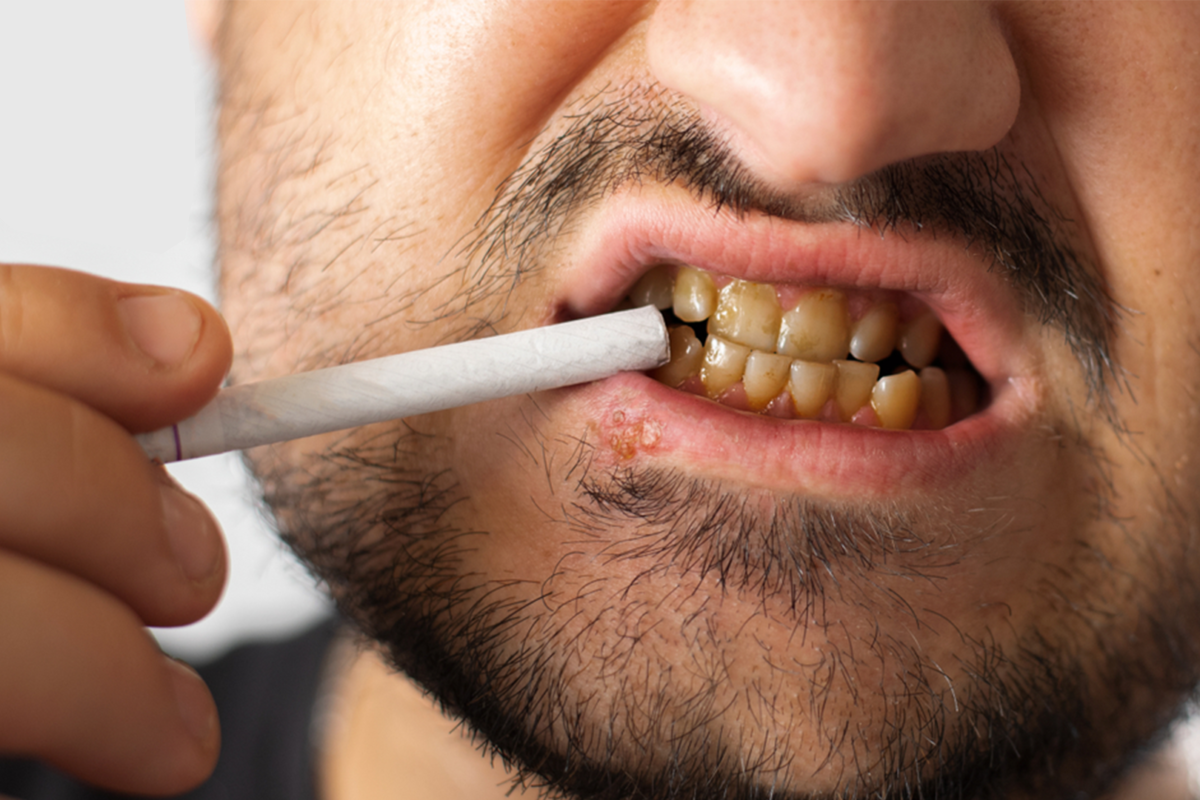
Are you a smoker who thinks your gums are healthy just because they don’t bleed when you brush? This is a common trap many people fall into every single day. Usually, bleeding is the first fire alarm for gum trouble, but smoking actually turns that alarm system off entirely.
Why Is Gum Disease So Quiet In Smokers?
Smoking does something very sneaky to your mouth. The nicotine causes vascular constriction, which is just a fancy way of saying it narrows your blood vessels. When your blood vessels are tight, your gums don’t get enough blood flow. This masks the redness and bleeding that usually tells you something is wrong.
Because the warning signs are missing, many patients don’t realize they need the best gum disease treatment until the damage is quite far along. You might feel like everything is fine, but underneath the surface, the bone holding your teeth in place could be shrinking away. If you think a quick brush solves everything, you might be missing the silent fire burning in your jawbone.
How Does Tobacco Use Change Your Treatment Needs?
When you visit a dental clinic Ottawa families trust, the experts look at more than just your teeth. They look at how your lifestyle affects your healing. Smokers are considered high-risk patients because their bodies simply don’t repair themselves as fast as non-smokers do. This changes the whole plan.
What specific challenges do smokers face during healing?
1. Weakened Immune Response: Your mouth’s “security guards” are sluggish and can’t fight off bacteria easily.
2. Dry Mouth Issues: Smoking reduces saliva, which is your mouth’s natural way of cleaning itself.
3. Nicotine Stains: Hard tartar sticks more stubbornly to nicotine-stained teeth, making it harder to clean.
4. Delayed Wound Healing: After a deep cleaning, your gums need extra time to reattach to the tooth roots.
5. High Failure Rates: Common fixes like dental implants or gum grafts fail much more often in tobacco users.
What Is The Best Way To Fix Gum Problems?
The best gum disease treatment for someone who smokes usually starts with a deep cleaning called scaling and root planing. Think of this like a “power wash” for your tooth roots. We go deep under the gum line to scrap away the hidden germs and smooth out the rough spots.
Wait until you see how your body reacts when we clear out the nicotine-stained tartar—it’s like flipping a switch for your health. However, even with the best tools, we have to be more aggressive with smokers. We might suggest more frequent visits to keep the bacteria from coming back.
Does Quitting Make A Big Difference For Your Teeth?
We always offer smoking cessation counseling because your results will be ten times better if you stop. Even cutting back helps your blood vessels open up again. This allows oxygen and nutrients to reach your gums so they can actually close the gaps around your teeth.
Without enough oxygen, your gums stay “starved” and weak. This makes it almost impossible for even the best gum disease treatment to work perfectly. We want your smile to be strong and bright, not just “patched up” for a few months. Long-term health is the real goal here.
Can You Still Save Your Smile If You Smoke?
Yes, you absolutely can, but you need a team that understands your specific needs. You need gentle care that focuses on deep cleaning and constant monitoring. We make sure the process is affordable and easy to understand so you never feel overwhelmed by the technical talk.
Heron Park Dental specialists believe – your smile is like a house; if the foundation is weak, the whole building is at risk. We specialize in reinforcing that foundation. Whether you need a simple checkup or emergency help for a loose tooth, getting professional eyes on your gums is the smartest move you can make today.
If you are ready to take control of your oral health, reaching out for a personalized plan is the first step. We are here to provide the expertise and support you need to keep your teeth for a lifetime.
FAQs About Smoking And Gum Health
1. Can gum disease be cured if I still smoke?
It can be managed and controlled, but it is much harder to “cure.” You will likely need professional cleanings every three months instead of every six months.
2. Why don’t my gums bleed even though they hurt?
Nicotine reduces blood flow to the area. This hides the typical bleeding symptoms, making the disease look less serious than it actually is. It’s a “silent” infection.
3. Is deep cleaning painful for high-risk patients?
We use very gentle techniques and local numbing to ensure you are comfortable. Our goal is a relaxed, pain-free experience that gets your health back on track quickly.
4. Will my gums grow back after treatment?
Gums don’t usually grow back once they have receded, but we can stop them from pulling back further. This protects your tooth roots from decay and sensitivity.
5. How often should smokers visit the dentist?
Most smokers benefit from a checkup every 3 to 4 months. This allows us to catch any new infections before they cause permanent bone loss or tooth loss.